
CDSCO DCC Meeting 2026: Key Amendments in Drugs Rules 1945, NDCT Rules & Pharmacy Regulations
CDSCO DCC Meeting 2026: Key Amendments in Drugs Rules 1945, NDCT Rules & Pharmacy Regulations
Introduction
India’s pharmaceutical regulatory landscape is evolving, with the latest CDSCO DCC Meeting 2026 introducing major updates in the Drugs Rules 1945 amendment and pharmacy regulations in India.
These changes reflect a growing focus on transparency, efficiency, and global alignment in the pharmaceutical sector.
What is DCC in CDSCO and Why is it Important?
The Drugs Consultative Committee (DCC) under CDSCO plays a key role in strengthening the drug regulatory framework in India and ensuring uniform implementation of drug laws. It serves as a key advisory body that supports uniform implementation of drug laws across states. In its recent deliberations, the committee focused on strengthening compliance systems, improving regulatory coordination, and reducing operational bottlenecks.
The recommendations also align with broader regulatory reforms led by NITI Aayog, particularly through the HLC-Sameeksha initiative.
Drugs Rules 1945 Amendment 2026 & NDCT Rules 2019 Update
One of the most significant developments in the Drugs Rules 1945 amendment 2026 is the proposal to update the NDCT Rules 2019 to improve compliance and regulatory efficiency
What is being proposed?
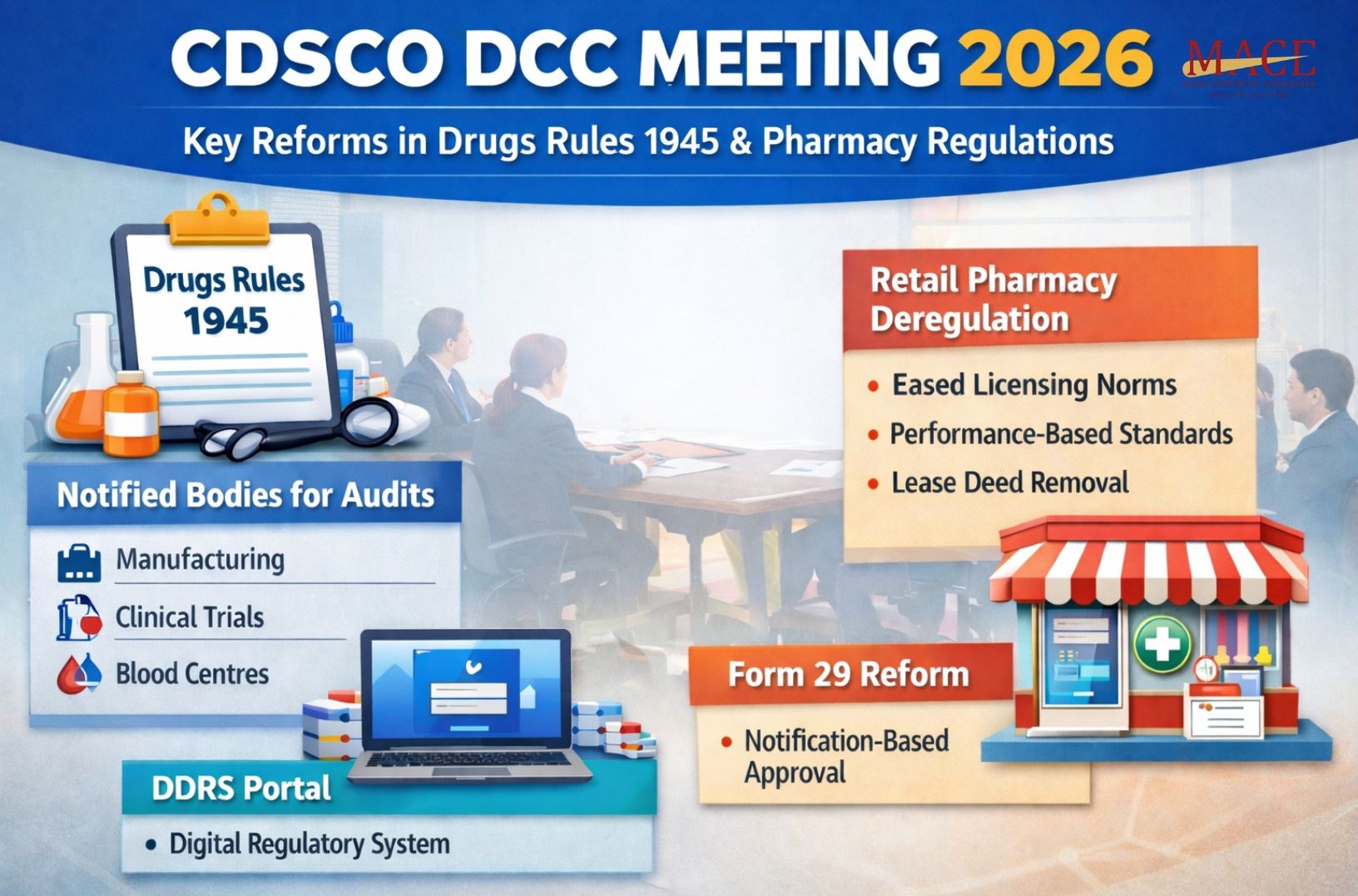
● Enabling notified bodies to conduct periodic audits
● Expanding oversight across drug manufacturing, clinical trials, laboratories, and blood centres
● Strengthening compliance through structured inspection mechanisms
In simple terms, the Drugs Rules 1945 amendment 2026 focuses on improving compliance, introducing audit systems, and modernizing drug regulation in India.
How Will Retail Pharmacy Regulations Change in India in 2026?
The DCC has proposed important changes in retail pharmacy regulations in India, focusing on simplifying compliance and improving ease of doing business.
Key proposals:
● Replace rigid space requirements with performance-based standards
● Remove requirement of competent person name on license
● Allow post-notification of qualified person within 15 days
● Eliminate mandatory lease deed registration
In simple terms, these pharmacy regulation changes aim to reduce compliance burden and make it easier to operate retail pharmacies in India.
For a deeper understanding of regulatory updates and compliance requirements, you can refer to detailed resources available on Mace Corporaet Associates
Reforming Form 29 Approval System
A proposal has been made to replace the traditional Form 29 approval system with a notification-based approach.
This shift could lead to:
● Faster approvals for testing and analysis
● Reduced administrative burden
● Streamlined regulatory processes
Such reforms align with India’s broader focus on pharmaceutical regulatory simplification
Digital Transformation Through the CDSCO DDRS Portal
The Digital Drugs Regulatory System (DDRS) is emerging as a cornerstone of India’s regulatory modernization.
Key features include:
● A unified digital platform for approvals
● A public performance dashboard for tracking timelines
● Integration of data across regulatory bodies
This initiative enhances transparency in CDSCO approvals and improves stakeholder access to information.
NDPS Drug Tracking System: Strengthening Monitoring
To address concerns around misuse and illegal circulation, the DCC has supported the development of a real-time tracking system for NDPS drugs.
This system will monitor:
● Manufacturing and distribution
● Import and export activities
● Stock and supply chain movement
It represents a critical step toward drug misuse prevention in India.
Enhanced Compliance Measures for Pharmacies
The committee has also emphasized the importance of monitoring retail practices.
Proposed measures include:
● Installation of CCTV systems in medical stores
● Development of a centralized MIS-based monitoring system
These measures aim to improve traceability and accountability in drug sales.
Addressing Antimicrobial Resistance and Compliance Gaps
The DCC also aligned with national priorities under NAP-AMR 2.0, focusing on antimicrobial resistance.
Key initiatives include:
● Guidelines for pharmaceutical waste management
● Strengthening supply chain quality systems
● Promoting rational use of antimicrobials
Other Key Regulatory Developments
Additional proposals from the meeting include:
● Debarment of non-compliant firms from licensing
● Regulation of pharmaceutical intermediates
● Approval frameworks for private testing laboratories
● Increased transparency in inspection outcomes
What Do These Reforms Mean for the Pharma Sector?
For Pharmaceutical Companies:
● More structured compliance requirements
● Greater reliance on digital systems
● Improved clarity in regulatory processes
For Pharmacy Operators:
● Reduced entry barriers
● Simplified licensing norms
● Greater operational flexibility
For Regulators:
● Better monitoring tools
● Enhanced inspection efficiency
● Stronger enforcement mechanisms
These updates are part of India’s broader pharmaceutical regulatory reforms led by CDSCO and policy initiatives by NITI Aayog, aiming to align the country’s drug regulatory framework with global standards.
For more expert insights on CDSCO regulations, pharmacy compliance, and drug regulatory updates, Mace Corporaet Associates serves as a reliable platform for industry professionals.
Conclusion
The recommendations from the DCC meeting 2026 reflect a balanced approach combining regulatory control with ease of doing business. By modernizing the Drugs Rules 1945, introducing digital systems like DDRS, and simplifying pharmacy regulations, India is taking a meaningful step toward a more responsive and globally aligned pharmaceutical ecosystem.
FAQs: CDSCO DCC Meeting 2026
1. What is the DCC in CDSCO?
The Drugs Consultative Committee (DCC) is an advisory body that ensures uniform implementation of drug laws in India and recommends updates to the Drugs Rules 1945.
2. What are the key highlights of the DCC meeting 2026?
Major updates include amendments to Drugs Rules 1945, introduction of notified bodies for audits, retail pharmacy deregulation, and development of the DDRS portal.
3. What are notified bodies in drug regulation?
Notified bodies are authorized agencies that may conduct audits of drug manufacturing units, clinical trial sites, and laboratories to support CDSCO.
4. What changes are proposed for retail pharmacies?
The reforms aim to simplify compliance by removing rigid space requirements, easing licensing norms, and allowing flexible staff notifications.
5. What is the DDRS portal?
The Digital Drugs Regulatory System (DDRS) is a unified platform designed to streamline approvals and improve transparency in CDSCO processes.
6. How will these reforms impact the pharma sector?
These changes will improve regulatory efficiency, reduce compliance burden, and promote a more transparent and digital drug regulatory system in India.
7. What are the latest CDSCO updates in 2026?
The latest updates include Drugs Rules 1945 amendments, pharmacy regulation changes, DDRS portal implementation, and audit reforms.
Access the official CDSCO guidance document on Drugs Rules 1945 amendment and DCC Meeting 2026 updates.
Note:
Cases related to Pharmaceuticals are highly technical and knowledge-driven. If you're searching for a drugs and cosmetics lawyer in India, a pharmaceutical lawyer, Mace Corporate Associates is the perfect place. If you are searching for a DPCO Lawyer for overcharging cases or DPCO Compliance, Mace can assist you well.
May it be a clinical trial Lawyer or a Medical device lawyer, Mace can be of great and perfect match for Pharmaceutical litigation. Mace has an accomplished track record for Not of Standard Quality Cases, Licensing Cases etc.

Want to know more?
Our team will answer all your questions. we ensure a quick response.
 (011)-46113619